
 Sneaker information
  Trend Express
  Equipment review
  Equipment Encyclopedia
  Personalized customization
  Release calendar
  Home
HomeHow do NBA teams determine their main colors? How much history does the team’s colors have? | sultan89, pinjol bi checking
In the NBA, the team name is undoubtedly the representative of a team. But for many fans, there's more to a team than just its name. Nowadays, many friends are very fond of basketball. Almost all of the friends around the editor of q6u.com are basketball fans and are very passionate about the NBA, but how much do you know about the culture of NBA teams?
How do NBA teams determine the main color?
For example, the Los Angeles Lakers, known as the Purple and Gold Army, the Boston Celtics, known as the Green Army, as well as the red representing the Houston Rockets and Chicago Bulls, and the black and white representing the Spurs, are already familiar to many people.
But where do these colors come from?
Does it represent the culture and tradition of the team just like the logo of each team? Or is it the result of a slap on the head by management?
Now, let us take a look at the origins of the colors of several representative teams.

More than 70 years of guardianship The green of the Celtics and the blue and orange of the Knicks
Since we are talking about colors, let’s first take a look at the Celtics, known as the Green Army.
Before telling the history of the Celtics, let's make one thing clear. In fact, most NBA teams have more than two colors. For example, in the Celtics' official manual, the team's colors include green, white, gold, black and brown. Of course, the ones we usually come into contact with the most are still green and white.
Speaking of the green color of the Celtics, it is actually inseparable from the origin of their team name.
The Celtics team name comes from the many local Irish descendants in Boston, especially the Celtics. Speaking of the Celts, that’s amazing. They are one of the oldest ethnic groups in Europe and one of the representative ethnic groups in Europe. As a sign and symbol of Ireland and the Celts, the shamrock has been used in the Celtic logo from the beginning, and the green represented by the shamrock has become the representative color of the Celts.

Although the Celtics' logo and jerseys have been modified several times in history, the touch of green on them has never faded away. After more than 70 years of operation, fans all over the world have long regarded green as the representative color of the Celtics. It is unique in the entire NBA and has no other semicolon.
After talking about the Green Army, the next thing to talk about is the New York Knicks. Why talk about the Knicks? Because the Knicks, like the Celtics, are the two earliest teams in NBA history that have never moved to another city.
In the Knicks team manual, there are also five main colors of the team, including white, black, silver, blue, and orange. But among these colors, the most impressive ones are blue and orange, which are also considered the representative colors of the Knicks. So where did the Knicks’ representative colors come from?
The team name "Knicks" comes from "Knickerbocker", which refers to the Dutch immigrants and their descendants who first settled in New York in the 17th century. In other words, Knickerbocker can be said to be the true aboriginal people of New York. At the same time, the bloomers they like to wear are also Knickerbockers in English.

We have said before when the Mavericks changed their name that there are many NBA teams with problematic Chinese translations, and the Knicks are obviously specious transliterations. However, it is precisely because of the transliteration that there is no deviation in understanding, which makes sense.
The earliest Knicks logo was designed by Willard Mullin, a cartoonist for the New York World Telegraph. Blue is one of the iconic colors on the Dutch flag, while orange is the national color of the Netherlands. The combination of blue and orange well reflects the origin of the city of New York. Today, New York has become an international metropolis, but the Knicks' blue and orange colors tell everyone how the city was originally established.
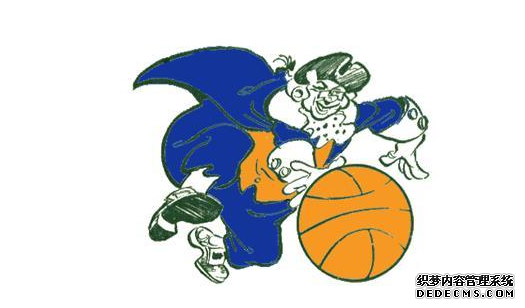
How much history does team color have?
The Lakers abandoned the sky blue, the Rockets changed from green to red, and the Warriors contrasted with the Knicks
The stories of more than 70 years ago are certainly exciting, but hearing too much about things in ancient times will inevitably make you tired, so let us take a look at the origins of the colors of some of the most popular teams at present.
Let’s take a look at the Los Angeles Lakers first. According to the latest Lakers media manual, the Lakers’ team colors are only two, purple and gold. Although the Lakers will still wear retro light lake blue jerseys this season, it is obvious that the Lakers do not think this color can represent the team. Similarly, the black color of the city version of the jersey only represents the recently retired Kobe, not the Lakers team.
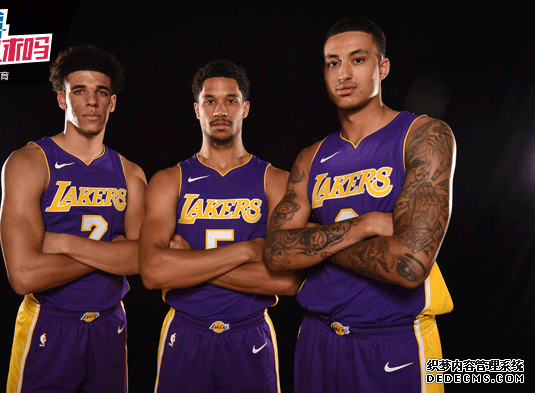
Actually, I don’t know if this counts as the Lakers forgetting their roots, because in the earliest days of George McCann, the Minneapolis Lakers wore light lake blue jerseys. The choice of this color, like the Lakers' team name, comes from Minneapolis' nickname "The Land of Ten Thousand Lakes". The light lake blue represents the color of the lake. However, after the Lakers moved from Minneapolis to Los Angeles, the Lakers immediately gave up the light lake blue color and adopted a darker navy blue as the color of the jersey. Elgin Baylor wore this color jersey that year.
The current purple and gold team colors first appeared in the 1960s. There is no evidence as to why gold and purple were chosen, but because Jerry West wore gold and purple jerseys in the 1960s and was intimidating, gold and purple gradually became established and became the colors of the Lakers team. Any adjustments made later were only fine-tuning, and no more changes were made to the theme tone.
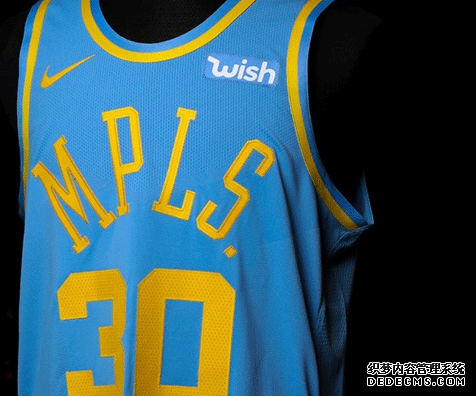
Fortunately, the Lakers moved away from Minneapolis, otherwise the Sky Blue Army would never sound as domineering as the Purple and Gold Army.
The next thing to tell is the story of the Rockets jersey. In the Rockets team manual, the Rockets team colors include red, silver, black and white. The golden yellow color that has existed for the Rockets for a long time is no longer one of the team colors. Only red is the most iconic color in Houston.
The Rockets' home court before moving to Houston was in San Diego. At that time, the Rockets were not wearing red jerseys, but green and gold jerseys, with the main body being green. The color choice of the jersey and the choice of the team name at that time were all to pay tribute to the increasingly developed space industry in San Diego. But the strange thing is that when most people see green at first sight, it is difficult to associate it with the space industry. It can only be said that people who choose this color jersey have really wild ideas. If you think about it carefully, this green color is closer to military green, and also closer to the color of avocados that are abundant in San Diego. However, the Rockets only played in San Diego for 4 years before moving to Houston and starting a 47-year career in Houston.
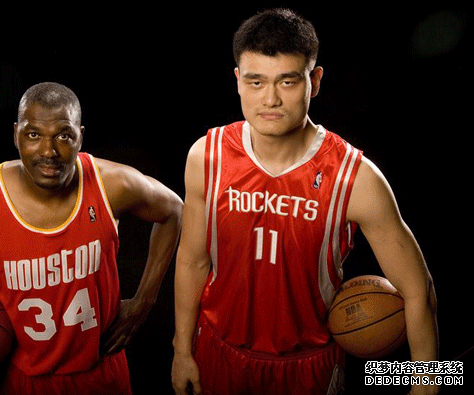
After moving to Houston, the Rockets immediately released their gold and red jerseys and logo, and the team's colors also changed to gold and red. Red not only represents the unique enthusiasm, wildness and unrestrainedness of the Texas people, but it also matches the color of the flames when the rocket takes off. In the 1990s, the Rockets once adopted dark blue and red jerseys and won the championship wearing this jersey. With Yao Ming being selected with the No. 1 pick by the Rockets in 2002, basketball exchanges between the Rockets and China have been in full swing. China Red has naturally become one of the best links between the Rockets and China. As a result, red occupies an increasingly important position in the Rockets, finally completely crowding out gold and becoming the only color impression fans have of the Rockets.
Finally, of course we cannot forget the most popular Warriors in recent years. In the Warriors media manual, there are three team colors, all with fancy names. One is called royal blue, one is called California Golden, and the other is shale color, which is a dark blue-gray. But for the majority of fans, the most familiar ones are of course blue and golden.
According to the description in the NBA Encyclopedia, the earliest period of the Warriors can be traced back to Philadelphia in the 1940s. However, the light-colored uniform they wore when they won the championship did not have the word "Warriors" printed on the chest, but the word "Phila" printed on the chest. At first glance, it is very similar to the current 76ers team uniform. In 1962, the Warriors moved from Philadelphia to San Francisco, and this new city became the home of the Warriors for the next 50 years.
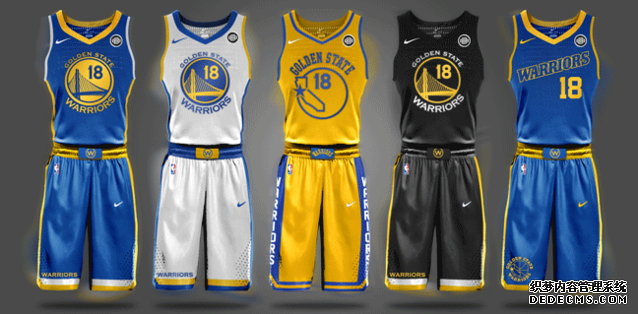
The Warriors quickly redesigned their jersey style and colors based on San Francisco's characteristics. Royal blue and yellow were already on jerseys at that time. In fact, the jerseys at that time were very similar to the current Warriors jerseys, and the tone of the team's colors had been set at that time. But there is another interesting thing about this color scheme. Warriors legend Al Attles recalled this jersey and said: "There is a bridge on it, and the bridge is printed with The City, with a taxi on the back. Imagine if we wore this jersey in New York, New Yorkers would think we were Knicks players. The situation at that time was that no one was willing to take off the jacket outside the jersey. If we took off the jacket to reveal this jersey, it would be unreasonable for the New York audience not to boo us.”
Whether it's booing or joking, in fact, if you look closely, the blue of the Warriors is different from the blue of the Knicks. Perhaps this is why this blue is called royal blue in the Warriors' media manual.
There is a sense of city pride behind team colors
There are other teams whose colors also have specific meanings.
For example, the Thunder's team colors are thunder blue, sunset yellow, yellow and navy blue. The combination of sunset yellow and yellow shows the beauty of Oklahoma City when the sun sets, while thunder blue is the color of the Oklahoma state flag. The team colors not only indicate the characteristics of the city where the team is located, but also clearly divide the state where the team is located, making it clear at a glance.

No matter how the 76ers change, there are only three colors with the highest recognition of the team, red, blue, and white, which happen to be the three colors on the American flag. Philadelphia is quite proud of being the birthplace of American independence, which is why the 76ers team name came from it. Of course, the team's colors must also be closer to this direction.
The Pacers' team colors have remained unchanged for many years, including navy blue, gold and cool gray, with navy blue and gold being the main colors. The Pacers' team name comes from the horse racing that was popular in Indiana at the time. Later, racing became one of Indiana's iconic sports. The combination of navy blue and gold is the two most common colors in motorsports.
Of course, for example, the purple of the Sacramento Kings and the black, red and silver of the Raptors do not have much meaning. Most of them are colors for the beauty of the logo and design services. Although it may be better in terms of expressiveness and color persuasion, the sense of belonging in the hearts of fans is still somewhat inferior.
The 76ers can still have a better market despite years of poor performance. The city pride brought by their team colors must have played a part in this.
Conclusion: It is easy to change the color of the jersey, but it is difficult to build a team culture
As the NBA continues to develop, both the league and the teams are changing with each passing day. Some colors that were originally suitable for a team are no longer suitable for the team as the team culture develops and is re-established. For example, the light lake blue of the Lakers has disappeared from the memory of many people. After all, teams like the Celtics and Knicks that have stuck to tradition for more than 70 years don't have many teams in the NBA.
However, in recent years, we have seen many league teams pay more and more attention to the team's culture and traditional colors, such as the Cavaliers' burgundy and the Warriors' royal blue. After many changes, they have returned to the classic colors of the early days when their teams were founded or moved to their current location. Maybe they saw from the Celtics and Knicks that if an NBA team wants to succeed, its record is indispensable, but its cultural heritage is equally important.
The Knicks have had a terrible record in recent years, but they are still one of the most profitable teams in the league. This is not because the New York audience is old-fashioned, but for more than 70 years, the Knicks' blue and orange colors have long become an inseparable part of New York.
A city, a team, and a color are definitely not just words.
最新更新
- The Ultimate Guide to Downloading Your Favorite An
- Mobile Game Development: How to Create Your First
- Top 10 Exciting Android Mobile Games You Need to P
- How to Play and Win at the Latest Mobile Strategy
- The Ultimate Guide to Downloading iOS Games on And
- Mobile Game Trends for 2023: What to Expect | free
- The Future of Mobile Gaming: Top Upcoming Releases
- Steam Games on Mobile: A Guide to Downloading Your
- Top 5 Free Mobile Games to Download on Android Rig
- The Best Epic Games to Download on Mobile | dana i
FeaturedRead
猜你喜欢
- Maximizing Your Gaming Experience: Tips for Androi
- Top 10 iOS Games to Download Right Now | igt onlin
- How to Optimize Your Mobile Gaming Experience on A
- The Future of Mobile Gaming: Innovations to Expect
- Top 10 Free-to-Play Mobile Games You Can’t Miss |
- Understanding Mobile Game Genres: From RPGs to Bat
- How to Choose the Best Mobile Games for Your Devic
- Essential Guide to Downloading and Playing Android
- Top 10 Mobile Games to Download in 2023: A Complet
- Top 10 Must-Play Mobile Games of 2023: Get Ready t
FollowUs